Marrakech is not a beginning. It is a crescendo. To land in Marrakech and try to walk the Jemaa el-Fnaa on the first evening — jet-lagged, blood pressure up, the noise hitting the wrong nerve — is to meet the loudest version of the country first, and then to spend the rest of the week trying to recover from it. We have watched it happen for thirty years.
Casablanca is the opposite. The flights from Paris and London land at Mohammed V, and the city is twenty minutes away, and the city is calm, and the city — for reasons most guidebooks find unworthy of comment — is the place where Morocco actually starts to make sense.
What Casablanca does.
It introduces the country at its most modern register. The Hassan II Mosque on the Atlantic, finished in 1993, is the second-largest in Africa and the most architecturally interesting religious building of the late twentieth century in this part of the world. The medina is small and walkable and not yet on the bus-tour circuit. The old French art-deco quarter on Boulevard Mohammed V is one of the better art-deco walks in the world and almost no one has heard of it. And the food in Casablanca is the food of working Moroccans — not the tourist version that has metastasised in Marrakech.
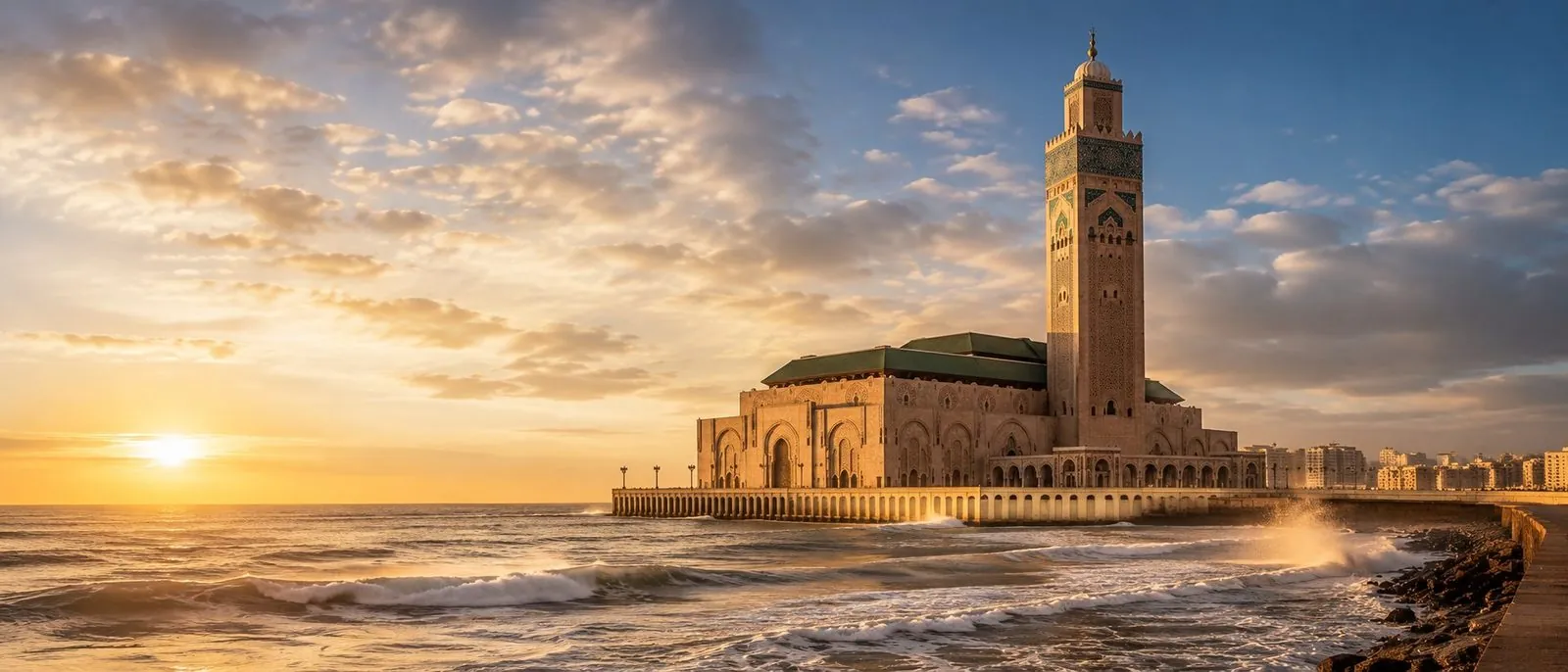
Two nights in Casablanca lets a guest arrive, sleep, eat properly, walk the city in low light, see the mosque, drink coffee with a planner of ours called Yassine who has worked here since 2003, and step into the rest of the country with their nervous system intact.
The drive north.
From Casablanca to Rabat is an hour on the A1. Rabat is the capital that almost no foreigner sees. It is the residence of the king. It is quiet, formal, walled, immaculate. The Chellah ruins on the south side are eleventh-century Almohad, layered over Roman ruins from the second century, and you can walk them with a guide who has been working there since the restoration began. We stop one night.
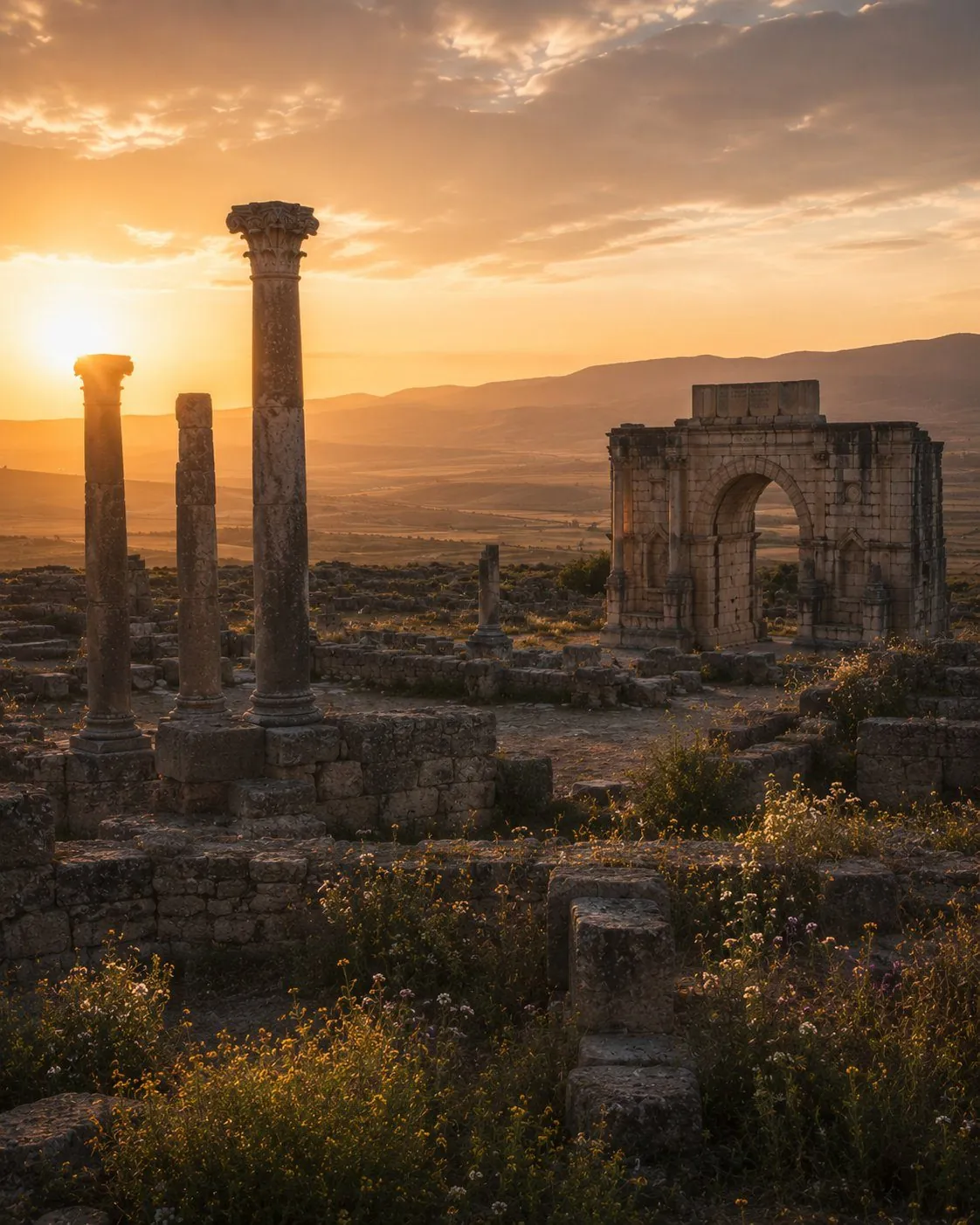
From Rabat to Meknès is two hours. From Meknès the next morning to Volubilis is forty minutes — the Roman city, with its mosaics still in situ, and Bab Mansour at the gate of Moulay Ismail's old capital. Then Fès, the medieval heart of the country, where we spend three nights because nothing in Fès rewards a single one.
From Fès to Marrakech is the long road south. Chefchaouen detour for those who want it. The descent into the plain. Marrakech, finally, on day seven or eight — by which point the guest has earned it.
What this changes.
The conventional itinerary — Marrakech in, Marrakech out, the desert in the middle — sells more easily because it asks less of the operator. One airport. One transfer. One time zone of attention. But it teaches the country backwards. It puts the climax on day one and asks the rest of the trip to compete with it.
It teaches the country backwards. It puts the climax on day one and asks the rest of the trip to compete with it.
The Imperial Trio, the way we built it, opens in Casablanca and closes in Marrakech because that is how the country is shaped. Modern first, then capital, then medieval, then imperial, then the southern desert if the group is going further. The story builds. The guest is ready for Marrakech when they get there, not buried by it.
The other thing this does — and this is operational, but it matters — is that it spreads the load on Marrakech. We do not bring groups into the medina on a Friday night. We do not stand at the corner of the Jemaa el-Fnaa with twelve people on day one. We let Marrakech be the third act, not the cold open.
What it asks of you.
An open mind about Casablanca, which has a poor reputation that it does not deserve. An extra two nights in the schedule. A willingness to take the slower road. The trust that we know where the country lands best.
We have been running the Trio this way since 2001. We have not had a guest finish in Marrakech and ask us, in the end, why we did not start there.