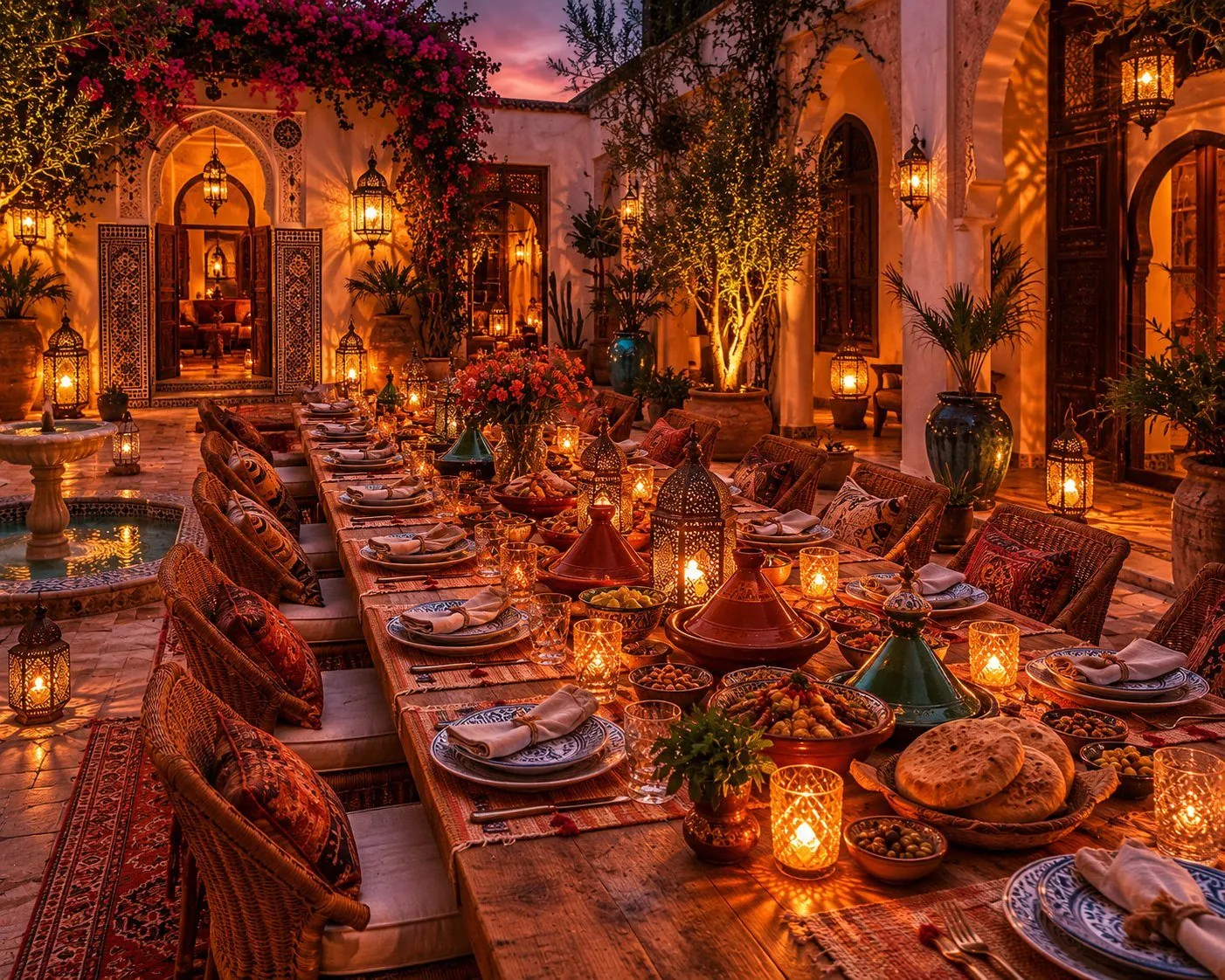
Twelve is not a marketing number. It is the largest group you can move through a medina without losing the back of the line. It is the largest table you can seat at a single long board in a Berber family house in Aït Bouguemmaz. It is the number of guests that fit in one Sprinter — properly, with luggage, with room to put a coat down. Twelve is operational, not aspirational.
We arrived at twelve in 1994 by accident. The minibus we had at the start was twelve seats. We did not think about it. By 1998 we had three vehicles and could have moved to sixteen, but by then we had figured out the other thing twelve does, which is that it is the largest dinner table at which you can hear what the person at the far end is saying.
What twelve does in a souk.
It moves at the speed of the slowest person without making them feel slow. It can stand around a brass-worker in a Talâa Kbira workshop without filling the room. It can listen to a guide in a quiet voice. It does not need anyone to shout. A group of twenty needs a microphone or a flag or both, and at that point you have stopped being a group of travellers and started being a tour.
The other thing twelve does in a souk is that it can split. If five guests want to follow the spice merchant down the side alley where he keeps the rare argan press, they can. The remaining seven stay with the guide. A larger group cannot afford to fragment because the cost of regrouping is too high.
What twelve costs.
It costs us. Honestly. A twelve-cap is the wrong number from a margin perspective. The break-even on a Sprinter and a guide and a driver is around seven; the fixed costs are not much smaller for a smaller group. Above twelve, every additional guest is mostly margin. We have been told this by every accountant who has looked at the books, including the one who works here now.
What twelve buys us is the kind of trip we want to run. The kind where the guide knows everyone's name by lunch on day one. Where the family hosting the dinner in Tafraoute is not overwhelmed. Where the eighty-year-old woman who weaves the kilims in Anzal has time to talk to each guest, not to nod at twenty of them in a line.
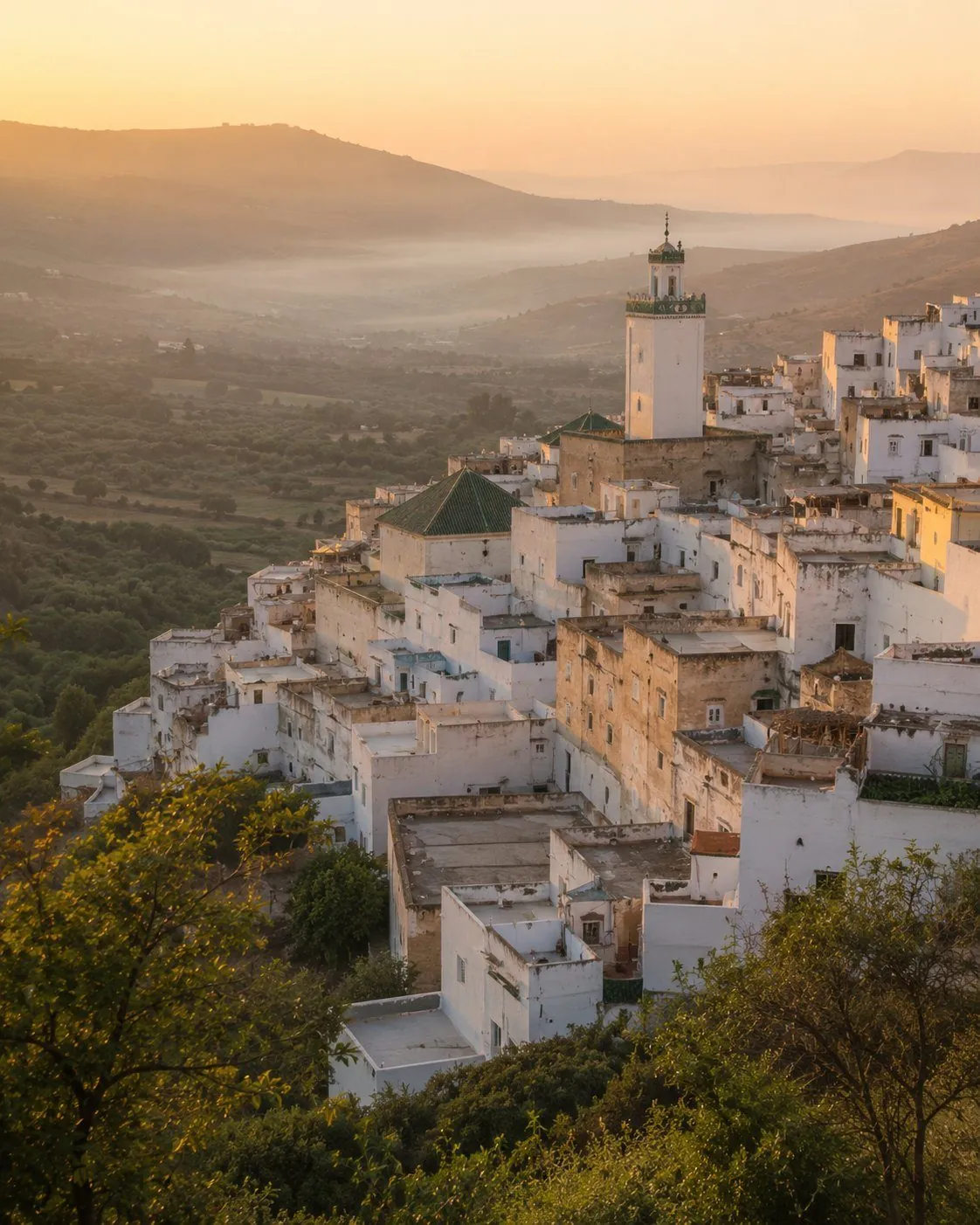
A twelve-cap is the wrong number from a margin perspective. What it buys us is the kind of trip we want to run.
The argument we hear most often.
"Why not fourteen? Fourteen is still small."
The answer is that fourteen requires a second vehicle on the long-drive days, or a larger vehicle that does not fit through the medina gates, or a guide who has to count more often. Fourteen sounds like it costs nothing, and operationally it costs everything. We tried it in 2002 for two trips. We went back to twelve and have not moved since.
What this means for you.
It means we do not have a group available every week of the year. It means some dates are full. It means that if you ask us about a January departure on a tour that is already at twelve, we will tell you the truth, which is that the next departure is in February.
It means we will not put thirteen of you on a vehicle. The thirteenth guest is told to wait, even when the thirteenth guest is a friend of one of the original twelve, even when it costs us the booking. This has happened. We will lose the booking again.
It also means, and this is the part that does not fit in a sales conversation, that you are joining a trip we can stand behind. Not a trip that has been ground out to hit a quarterly number. Not a trip where the back row cannot hear. Not a trip where the family hosting dinner has been overwhelmed and is, by guest number eight on the table, smiling thinly.
Twelve is the discipline. Thirty years is the proof that the discipline works.