The buses arrive at ten. They are punctual, the way bus tours are. The drivers know each other and park in the same order on Place R'cif. The guides hand out the sprigs of mint at the foot of the leather shops, and the guests climb the stairs to the balconies above the vats, and they take the photograph that everyone takes, and they leave.
At six in the morning, none of that has happened yet. There is no mint. There is no balcony fee. The leather sellers have not opened their shutters. There are perhaps a dozen tanners in the courtyard, and the light is coming over the wall on the south side, and the vats are full but still. The pigeons that live in the eaves are louder than the men.
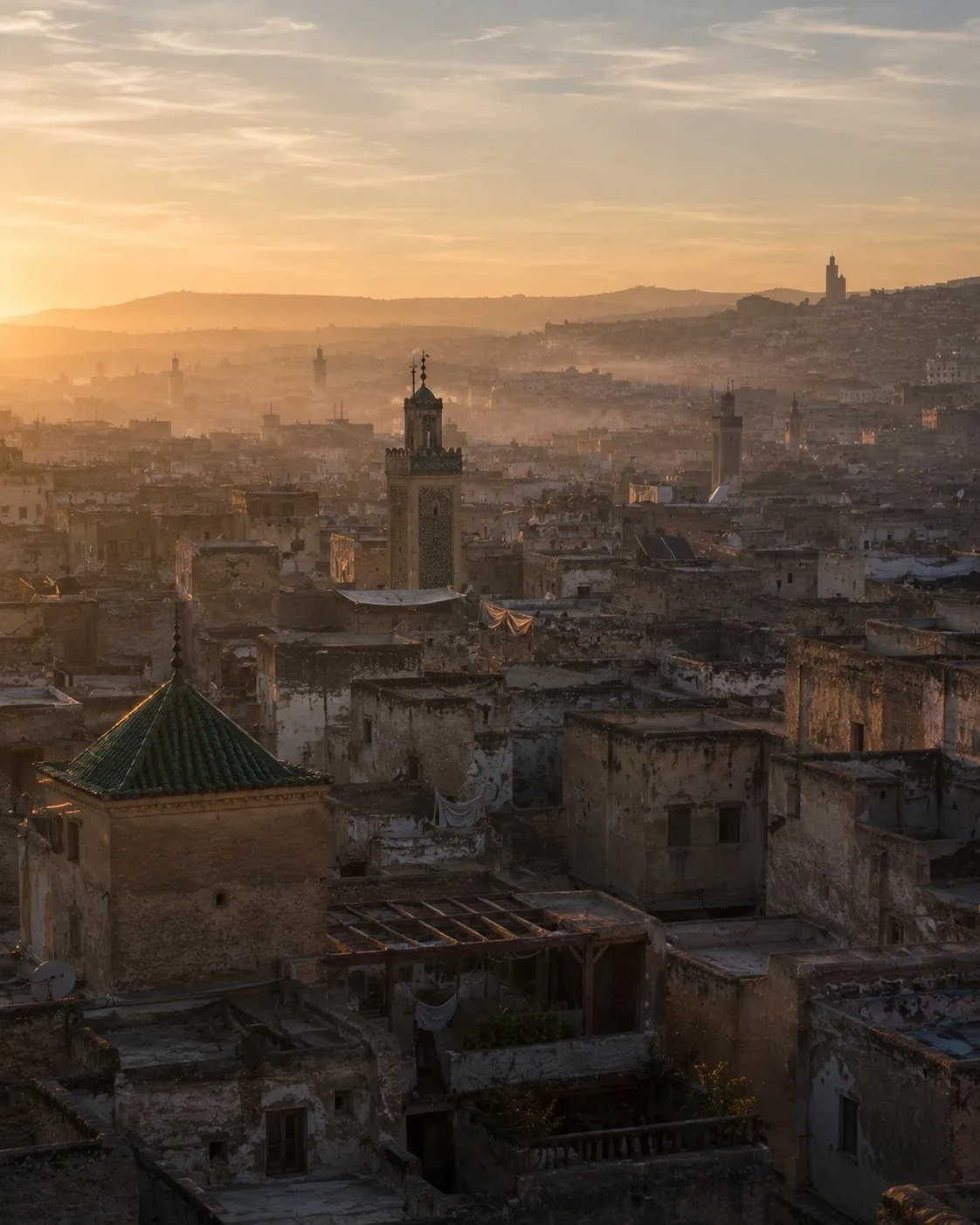
I have been bringing guests to Chouara at six for twenty-something years. It started as an accident — a flight in from Madrid landed at four and we drove straight to the riad and the group could not sleep — and it became the only way I would ever show the tannery.
What you see.
The vats are arranged in a pattern that is not random. The white ones along the eastern wall are pigeon-droppings and lime — that is the soak that softens the hide. The yellow ones nearer the centre are saffron, used sparingly and only for shoes. The deep reds are poppy. The browns are henna. The blacks are antimony. The greens are mint. The blues are indigo, which is the rarest now because the dyer who made the best indigo in Fès died in 2019 and his son moved to France.
None of this is on a sign. There is no sign in Chouara. There is a man called Abdelhakim who knows everything about every vat and who will not speak to a group of twenty.
What it asks of you.
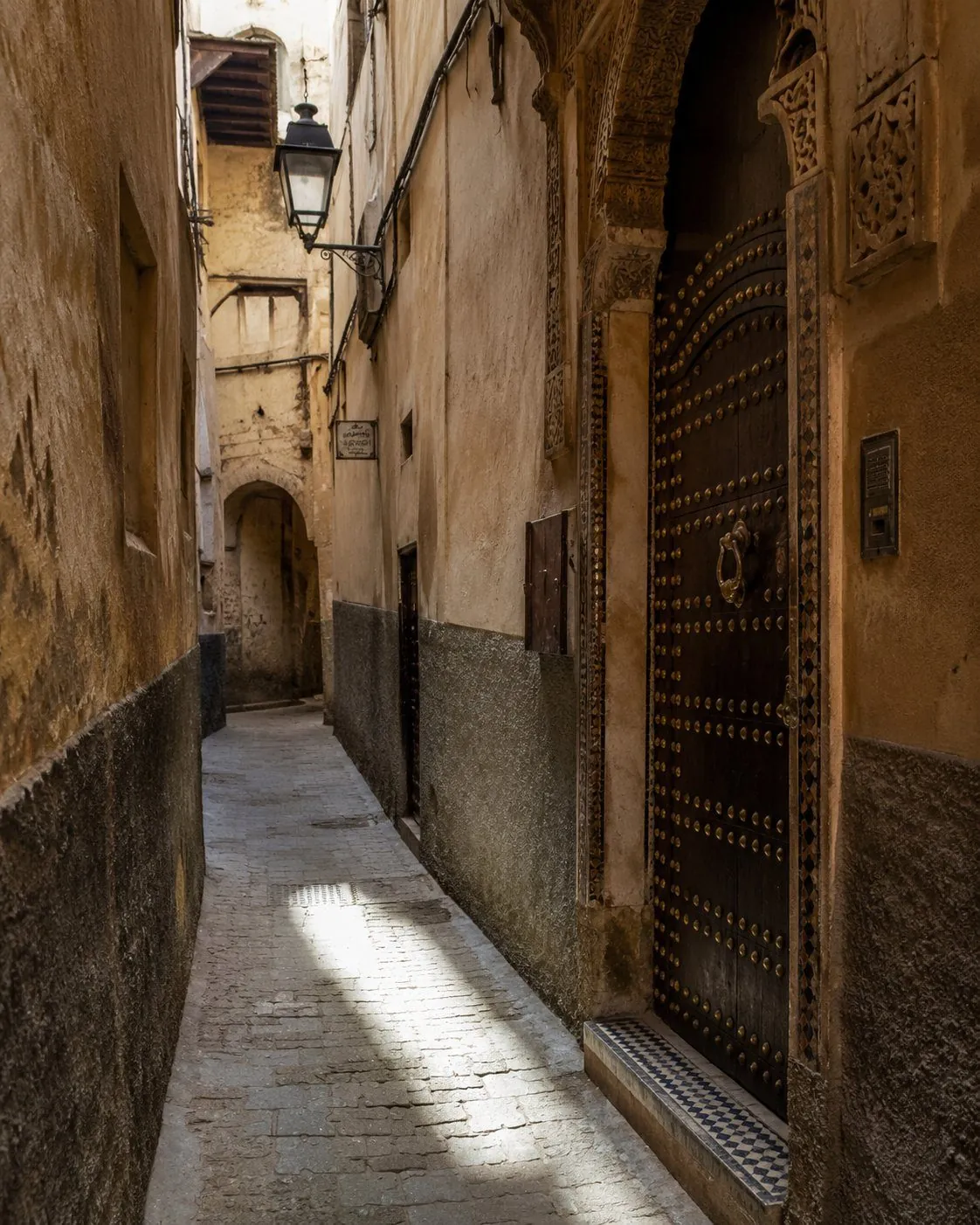
An early start. A pair of shoes you do not mind. The willingness to walk down the alley behind Talâa Kbira at first light, when the medina is asleep and the only sound is the call from the Karaouine. The willingness to take no photograph, or to take one, but not the one everyone else takes.
The smell, which has been written about endlessly, is not the point. The smell is what people who have been told to be afraid of it remember. The point is that men are working — that this has been the shape of work in this part of the city since the eleventh century, and that the work continues, and that you can be present at the work without disturbing it, but only at six.
The smell is what people who have been told to be afraid of it remember. The point is that men are working.
Why we keep doing it this way.
Every two or three years a guest will ask if there is a more comfortable time to go. Ten, perhaps, when the cafés are open and there is a balcony with a cushion. We have a polite answer for this. The polite answer is yes, of course, we can arrange it.
The honest answer is that the tannery at ten is a different place. It is a place where someone is selling you a wallet. It is a place where the courtyard is full of people taking the same photograph. It is a place where you cannot hear the pigeons, because there are too many voices.
We are in the business of bringing guests to Morocco. We are not in the business of bringing them to the photograph of Morocco. The two are not the same thing, and the gap between them, which has only widened in the last decade, is the gap we built the company to close.
Chouara at six is one of the moments where the gap closes.